Beyond Reach Labs

Beyond Reach Labs

Space solar arrays that grow to the size of a football field in orbit

Winter 2026ActiveIndustrialsAviation and SpaceHard TechHardwareSpace ExplorationSatellitesAerospace
At Beyond Reach Labs we are building solar panels for Space that grow from the size of a dining table to a football field in orbit. Mitch and Pele met 13 years ago as freshmen at UPenn studying mechanical engineering. Mitch recently got his PhD at Carnegie Mellon working with NASA on kilometer-scale deployable structures, and Pele spent seven years at SpaceX leading Dragon parachute engineering, safely returning astronauts from space. The collective satellites today use around 20MW, roughly the output of a datacenter on earth, but by 2030 there is a demand for over 10GW, a 500x increase, largely driven by orbital datacenters, space stations, and lunar outposts. If you want more power, your only option is to launch larger solar panels, which quickly become fragile or impractically expensive. As a result, power constraints already determine whether missions or industries can exist at all. But at Beyond Reach Labs we have introduced a new class of deployable solar panels giving satellites 10x more usable power without increasing launch mass or volume. This works because our patented deployable design changes geometry in space, allowing for us to reach 10x longer while remaining rigid.

Verdict

High Signal
Market Opportunity
The company cites a clear demand inflection: from ~20MW collective satellite power today to 10GW+ by 2030 (500x growth), driven by orbital datacenters, commercial space stations, and lunar outposts. ICP is well-defined across three segments. Defense adjacency is strong given AFRL advisor Tom Cooley's background. Space infrastructure is a $100B+ emerging market with structural tailwinds from SpaceX launch cost reductions.
High Signal
Founder Signal
Pele Collins spent 7 years at SpaceX across Structures Engineer → Senior Structures Engineer → Manager of Parachutes Production and Engineering, with direct responsibility for human-rated Dragon parachute systems, plus 1.4 years as Technical Team Lead at Commonwealth Fusion Systems. Mitchell Fogelson completed his PhD at CMU specifically on kilometer-scale deployable space structures funded by a NASA NIAC grant, with prior robotics research at UPenn KodLab and Rakuten Institute of Technology. Both co-founders have deep, directly relevant technical expertise — this is an unusually strong technical pairing for deep space hardware.
Medium Signal
Competition
No competitor data was found in research, but the space solar array space includes incumbents like Deployable Space Systems (ROSA arrays used on ISS), Redwire, and Maxeon/Spectrolab for solar cells. The patented novel deployable geometry claiming 10x stiffness improvement at same mass is a meaningful differentiation claim, but without published test data or customer validation, the moat is unproven. The AFRL advisor relationship and NASA NIAC-funded origins provide some IP and institutional credibility.
Medium Signal
Product
Website has an interactive bending mode simulator demonstrating the structural physics, patented deployable architecture, and clear technical value proposition (10x more power without increasing launch mass). However, 'Announcement Coming Soon' on the solution page signals no hardware delivered yet, no customer logos, no revenue metrics, and no live demo of actual hardware.
OverallB Tier

Beyond Reach Labs has one of the strongest technical founder pairs in the YC W26 batch — a CMU PhD whose dissertation IS the product combined with a SpaceX parachute systems manager who has human-rated hardware experience. The market timing is real: the 500x power demand increase by 2030 is driven by concrete programs (orbital datacenters, Artemis lunar outposts). However, this is still pre-revenue deep space hardware with an 'announcement coming soon' on the actual product, no named customers, and no evidence of hardware validation beyond simulation. The path from patented concept to flight-qualified hardware is measured in years and tens of millions of dollars. The AFRL and MIT advisors add credibility for government contracts. Watch for: first hardware demonstration, any DoD/NASA contract wins, and whether they can translate Pele's SpaceX relationships into anchor customers.

Active Founders
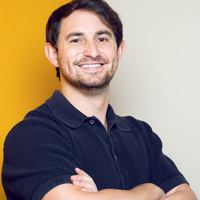
Pele Collins
Pele Collins
Founder, co-CEO

I have been working on some of the hardest technical challenges for almost a decade. I spent 6 years as SpaceX leading the engineering and production teams for the parachutes and between that also worked as the Plasma-Facing-Components Technical team lead at Commonwealth Fusion Systems. Now as co-founder of Beyond Reach Labs, we are currently working to enable space megastructures to be deployed from a single rocket launch and to accelerate the design of deployable space systems.
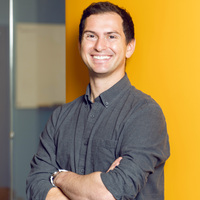
Mitchell Fogelson
Mitchell Fogelson
Founder

Hey, my name is Mitch Fogelson. I have been working on the design of robotic and mechanical systems for the past decade. I recently completed my PhD at CMU on the design, simulation, and optimization of kilometer-scale deployable space structures. Beyond Reach Labs is currently working to enable space megastructures to be deployed from a single rocket launch, accelerating new space capabilities.

Beyond Reach Labs
Beyond Reach Labs
TierB Tier
BatchWinter 2026
Team Size2
StatusActive